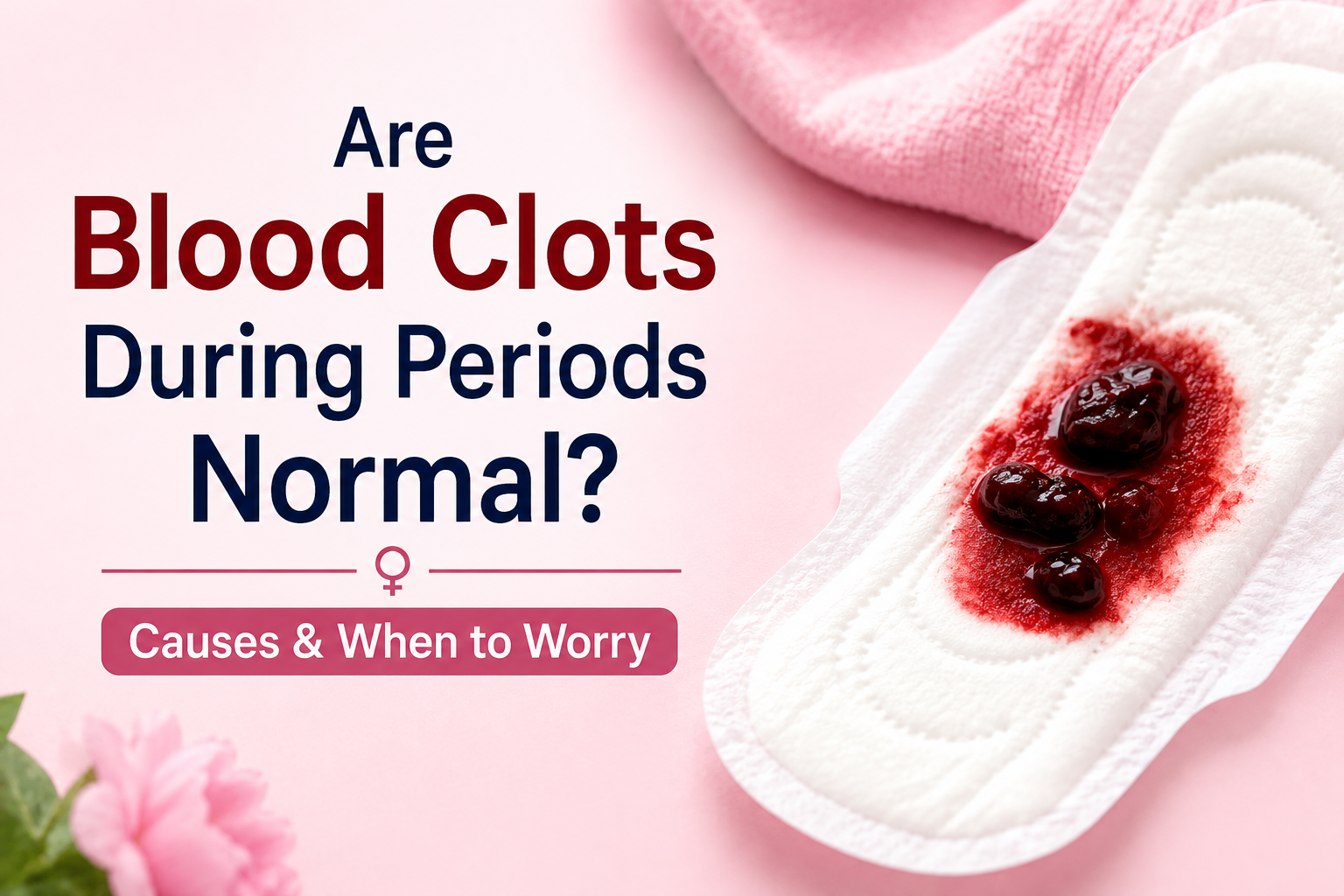
Seeing blood clots during your period can be worrying, especially if they're thick or jelly-like. The good news is that small blood clots (usually smaller than a quarter or about 2.5 cm) are often normal, particularly on the heaviest days of your menstrual cycle. These clots form when menstrual blood collects in the uterus and the body's natural clotting process occurs before the blood leaves the body.
However, frequent large blood clots, severe menstrual cramps, or bleeding heavy enough to soak through a pad or tampon every hour are not considered normal and may indicate an underlying gynecological condition that requires medical attention. In this article, we'll explain why blood clots occur during periods, when they are normal, the possible causes, warning signs to watch for, and when you should consult a gynecologist.
What Are Period Blood Clots?
Menstrual blood clots occur due to the formation of massive lumps of fat, comprised of tissues, blood, and proteins. They form naturally during menstruation. These clots can range in color from dark red to bright red to brown.
When there is heavy menstrual bleeding, the body fails to metabolize the blood as fast as it is flowing, and therefore, clots are formed during the period.
Formation of small blood clots in heavy flow is quite normal.
Are Jelly-Like Blood Clots During Period Normal?
Yes, in many situations, jelly-like blood clots during the period are normal, especially if:
- The clots are smaller than a coin
- They appear only during heavy flow days
- There is no severe pain
- Periods remain regular
- The clotting happens occasionally
It is natural for the body to produce anticoagulants during menstruation to avoid clot formation. However, if there is too much blood loss, the process may be slow, thus causing clot formation during periods.
But in cases wherein the clot is large, appears frequently, and is accompanied by painful symptoms, medical attention should be sought immediately.
Why Do Blood Clots Happen During Periods?
Tissue and blood leaving the uterus repeatedly can lead to blood collecting inside the uterus or the vagina if there are changes to the cycle and the amount of blood released. Eventually, the blood that collects outside the uterus can lead to the development of blood clots. (This probably shouldn’t be repeated due to the sheer grossness of the example, but you seem to want to know about blood clots.
Blood clots can be caused by changes in the levels of hormones and problems with the uterus.
Common Causes of Blood Clots in Periods
1. Heavy Menstrual Bleeding
A heavy flow is among the main reasons behind bleeding clots during periods. If bleeding is too frequent, it is when blood pools before leaving the body and forms clots.
The signs of bleeding are:
- Change pads often
- Bleeding for more than 7 days
- Large clots that are passed through
- Insufficiency or fatigue
2. Hormonal Imbalance
The most common reason for menstrual clots is when a person experiences heavy menstrual bleeding. The body forms clots when excessive bleeding causes blood to accumulate in the body before it leaves the system.
The hormonal imbalance can be because of:
- Stress
- PCOS
- Thyroid disorders
- Changes in weight
- Perimenopause
3. Uterine Fibroids
Fibroids are non-cancerous growths in the uterus. They can cause:
- Heavy bleeding
- Pelvic pressure
- Painful periods
- Large period blood clots
Fibroids are very common in women during their reproductive years.
4. Endometriosis
In endometriosis, uterine tissue, which is like the uterine lining, grows out of the uterus. The condition can cause:
- Severe period pain
- Massive bleeding
- Large blood clots during periods
- Pain during intercourse
5. Adenomyosis
Adenomyosis occurs when the uterine lining grows into the muscular tissue of the uterus. The condition leads to extended and painful menstrual cycles, which result in increased frequency of blood clots during menstruation.
6. Pregnancy-Related Causes
The occurrence of unusual clotting tendencies emerges during the initial stages of pregnancy loss or miscarriage events. The need for immediate medical assistance becomes essential when people experience significant bleeding with large blood clots during pregnancy.
Normal vs Abnormal Period Blood Clots
Symptoms That Should Not Be Ignored
Although blood clots during periods tend to be harmless, certain symptoms could signal a deeper issue.
See a doctor if you are experiencing:
- Large clots are common
- Severe pelvic pain
- Extremely massive bleeding
- A period that lasts longer than one week
- Bleeding between periods
- Breathing shortness
- The symptoms of anemia or weakness
- Sudden changes in menstrual pattern
These signs should not be ignored as they could be a sign of fibroids, hormonal issues or other gynecological issues.
Can Period Blood Clots Cause Anemia?
Yes. Frequent heavy bleeding and blood clots could cause iron deficiency anemia.
The signs of anemia are:
- Constant tiredness
- Pale skin
- Headaches
- Dizziness
- Weakness
- Fast heartbeat
Women with heavy menstrual cycles must be conscious of the iron levels of their bodies on a regularly.
How Are Blood Clots During Periods Diagnosed?
Doctors usually diagnose the cause of abnormal period blood clots through:
Medical History
The doctor may ask about:
- Menstrual cycle pattern
- Flow intensity
- Pain levels
- Clot size and frequency
Physical Examination
A pelvic exam may help identify uterine abnormalities.
Diagnostic Tests
Treatment for Blood Clots in Periods
Treatment depends on the underlying cause.
Common Treatment Options
Medications
Doctors may prescribe:
- Pain relievers
- Hormonal birth control
- Iron supplements
- Hormonal therapy
Lifestyle Changes
Simple lifestyle adjustments may help reduce heavy bleeding:
- Maintaining a healthy weight
- Regular exercise
- Managing stress
- Eating iron-rich foods
- Staying hydrated
Surgical Treatments
In severe cases, procedures may include:
- Fibroid removal
- Endometrial ablation
- Hysteroscopy
- Hysterectomy
Home Tips to Manage Heavy Period Clots
Here are some easy ways to control clots at home during periods of time:
- Utilize heating pads to relieve cramps.
- Make sure you drink enough water
- Consume iron-rich foods such as beetroot and spinach
- Avoid excessive caffeine
- Track menstrual cycles
- Rest enough
These are ways that improve conveniences and advance recovery in menstrual health.
When Should You See a Gynecologist?
You should see a gynecologist when you have:
- Heavier menstrual bleeding than usual
- The presence of large blood clots
- Weakness or fainting during menstrual periods
- Menstrual pain that is hard to cope with
- An unexpected change in your menstrual cycle
Early detection will reduce the risk of further problems.
Conclusion
In most cases, small blood clots during periods are completely normal, especially on the heaviest days of your menstrual cycle. However, if you notice large blood clots, excessive bleeding, severe pelvic pain, or frequent clotting, it could be a sign of an underlying gynecological condition that should not be ignored.
Understanding the difference between normal and abnormal period blood clots can help you take timely action and protect your reproductive health. If your menstrual pattern changes suddenly or your symptoms become severe, it is important to consult a qualified gynecologist for a proper diagnosis and personalized treatment.
If you're experiencing abnormal menstrual bleeding, blood clots, or have concerns about your reproductive health or fertility, consult Dr. Shreshtha Sagar Tanwar, an experienced IVF specialist in Greater Noida with over 16 years of expertise. She provides comprehensive evaluation, personalized treatment, and compassionate care to help women achieve better gynecological and fertility outcomes.