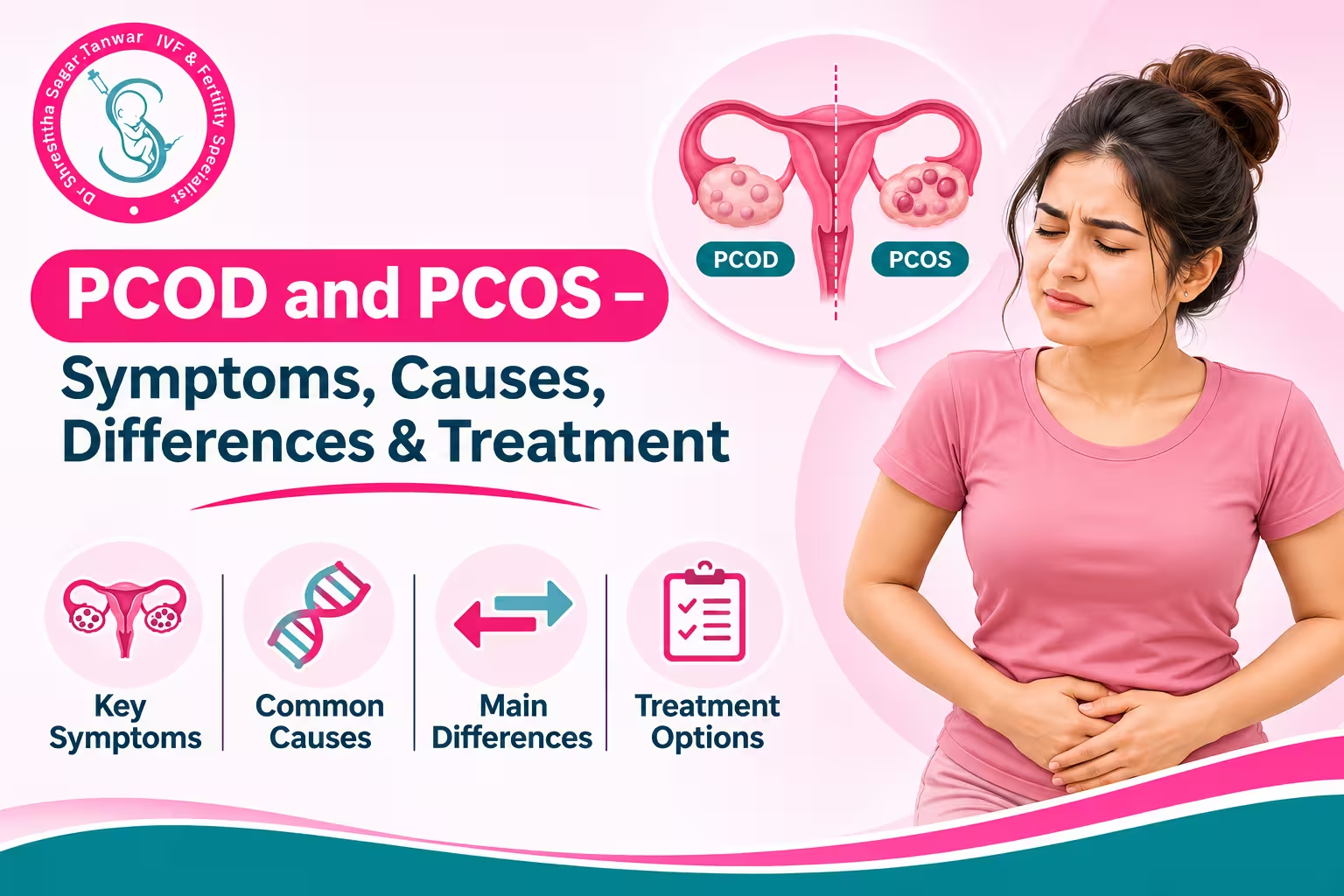
PCOD (Polycystic Ovarian Disease) and PCOS (Polycystic Ovary Syndrome) are both hormonal conditions that affect the ovaries, though they differ significantly in severity, causes, and health risks.
What Is PCOD?
PCOD (Polycystic Ovarian Disease) is a hormonal condition that can affect how the ovaries function. In this condition, the ovaries may release immature or partially mature eggs, which can sometimes remain in the ovaries and appear as small fluid-filled sacs.
These changes can affect reproductive hormone balance and may lead to irregular ovulation and changes in the menstrual cycle. The symptoms of PCOD can vary from woman to woman.
Common PCOD symptoms may include:
- Irregular or delayed periods
- Acne and oily skin
- Weight gain in some women
- Hair thinning or unwanted facial or body hair
- Difficulty getting pregnant due to irregular ovulation
Some women may experience only mild symptoms, while others may notice more significant changes in their periods, skin, hair, or ovulation. If you have persistent menstrual irregularities or other concerning symptoms, speaking with a gynecologist can help identify the underlying cause and guide appropriate care.
What Is PCOS?
PCOS (Polycystic Ovary Syndrome) is a common hormonal and metabolic condition that affects many women of reproductive age. It can occur when the body produces higher-than-normal levels of androgens (male hormones), which may disrupt normal ovulation.
In PCOS, the ovaries may develop multiple small fluid-filled follicles, and eggs may not be released regularly. This can lead to irregular periods, hormonal changes, and difficulty with ovulation.
PCOS has also been renamed PMOS (Polyendocrine Metabolic Ovarian Syndrome) to better reflect its hormonal and metabolic effects.
Common symptoms may include:
- Irregular or missed periods
- Acne and oily skin
- Unwanted facial or body hair
- Weight changes
- Hair thinning
- Difficulty getting pregnant due to irregular ovulation
Symptoms can vary from person to person, and not everyone experiences all of them.
I can make it even shorter and more human-friendly if you want it to match the exact style of your PCOD section.
Difference Between PCOD and PCOS
The difference between PCOS and PCOD is that the terms are used interchangeably. PCOS is a recognised medical condition, whereas PCOD is mostly used in India. There is no absolute distinction between the two that makes them necessarily distinct in terms of severity.
PCOD vs PCOS: Which Is More Serious?
Both terms do not necessarily indicate the seriousness of the situation that a female patient is experiencing. The severity of the case will depend on the symptoms, hormonal levels, menstrual cycle, metabolism, and other reproductive functions that one has.
Common Symptoms of PCOD and PCOS
PCOD and PCOS may share several symptoms. These can include:
- Irregular, delayed, or missed periods
- Acne and oily skin
- Unwanted facial or body hair
- Hair thinning or hair loss
- Weight changes
- Difficulty conceiving due to irregular ovulation
There are three recognized symptoms of PCOS, which include irregular ovulation or menstruation, increased presence of androgens such as excessive hair growth in the face, and polycystic appearance of the ovaries on an ultrasound. Not all women have these symptoms, and ultrasound alone cannot diagnose PCOS.
If the problem persists, then the assistance of a gynecologist may help to determine the underlying cause.
What Are the Causes of PCOD and PCOS?
The exact cause might be different. Some factors might cause these kinds of symptoms in women.
- Hormonal imbalance: An increase in androgenic hormones may lead to acne, excess hair growth, and irregular periods.
- Insulin resistance: The inability of the body to react to the effects of insulin on the body.
- Genetic predisposition: PCOD might be more prevalent among women whose family members suffer from this problem.
- Metabolic problems: Metabolic issues, including weight gain or loss, may influence symptoms, though there is a possibility of having PCOD without being overweight.
All of the above-mentioned causes of PCOD should not make a woman think that she did something wrong.
How Are PCOD and PCOS Diagnosed?
Questions could be raised regarding menstruation, skin issues, body hair growth, and intention to conceive. The doctor could advise the patient to go through:
A general physical examination
- Blood work to check for hormones
- Ultrasound if necessary
- Tests related to blood sugar and other general health tests
There is no one specific test that can be used to diagnose all cases of PCOS.
PCOD and PCOS Treatment
The correct treatment for PCOD and PCOS will depend on the symptoms and whether the female is planning to conceive.
This treatment will involve:
- Modifying daily routines: A healthy diet, exercise, and adequate rest will promote good health.
- Pills to regulate menstruation: The physician may prescribe some pills that help in controlling menstrual issues.
- Skin and hair treatment: Pills might be recommended to treat the appearance of pimples and excess body hair.
- Care of high blood sugar levels: Insulin resistance or increased blood sugar levels require special attention and treatment.
- Conception treatment: Those females that have fertility issues will get the chance of conceiving by taking medications to release the egg and others to become fertile.
In conclusion, there is no universal way of treating the problem; the choice of treatment methods will depend on the symptoms of the patient, test results, and fertility plans.
PCOD vs PCOS Treatment: Is There a Difference?
The treatment depends on the diagnosis made and the symptoms and not necessarily the diagnosis label itself. For instance, a woman who is worried about having irregular menstruation will require a different course of treatment from another one who requires help to conceive.
How Can PCOD Be Managed at Home?
Home care can support treatment, but it cannot replace a medical assessment. Helpful habits may include:
- Eating balanced meals with vegetables, protein, whole grains, and other nutritious foods
- Staying physically active through walking or other suitable exercise
- Maintaining a regular sleep schedule
- Avoiding crash diets and unverified supplements
- Tracking menstrual cycles and noting changes in symptoms
These habits may support general and metabolic health. However, home remedies cannot guarantee that PCOD or PCOS will go away.
Can Women With PCOD or PCOS Get Pregnant?
Yes, many women with PCOD or PCOS can conceive naturally. But it becomes difficult for them to find the perfect timing because of the erratic release of the egg.
Those women who want to conceive must see a fertility expert in case of irregular menstrual cycles or if conception is taking time. The treatment might consist of medicines or any other form of fertility treatment, depending on the cause.
Women with PCOS don't need to be infertile.
What Happens If PCOD or PCOS Is Left Untreated?
Persistent symptoms should not be ignored. Depending on the condition and individual health factors, untreated PCOS may be associated with:
- Continued irregular periods or ovulation problems
- Difficulty conceiving
- Persistent acne or unwanted hair growth
- Increased risk of insulin resistance and type 2 diabetes
- Thickening of the uterine lining when periods are very infrequent
Not every woman will develop these problems. Timely medical advice can help manage symptoms and identify any risks that need attention.
Conclusion
PCOD and PCOS may lead to irregular menstrual cycles, skin issues, and fertility problems. However, when properly taken care of, these health problems can be managed, making conception easier. Dr. Shreshtha Sagar Tanwar,an infertility specialist in Greater Noida with more than 16 years, works with women to educate them on their condition and select the best treatment options. Women struggling with PCOD, PCOS, or pregnancy can reach out to Dr. Tanwar for guidance.
Frequently Asked Questions
1. Is PCOD or PCOS more concerning?
The differences between PCOS and PCOD tend to be more in name than in nature. Symptoms, menstrual irregularities, hormonal imbalances, and metabolic health should be the major points of focus rather than semantics. A healthcare professional specializing in women’s health and a gynaecologist should be best placed to assess the symptoms and address the concerns based on the context.
2. Does PCOD always develop into PCOS?
Not always. The terms PCOD and PCOS may have a different meaning depending on the context. Based on an individual assessment of the condition, certain associated factors may require immediate treatment and intervention.
3. Can PCOD and PCOS be managed without medication?
Even though some women can control certain symptoms of PCOD/PCOS through regular exercise and healthy diet and sleep, it may not be possible for everyone. No matter what changes one makes in their lifestyle, some women may need medication to cope with the symptoms of PCOD/PCOS.
4. Is it possible for women with PCOD or PCOS to conceive naturally?
Yes, plenty of women who suffer from PCOD or PCOS conceive naturally. Nevertheless, some might find it hard to conceive because of problems with ovulation. In case conception takes longer than anticipated, a gynecologist could examine whether ovulation occurs and what treatment options are available.
5. Is there such thing as PMOS?
PMOS refers to Polyendocrine Metabolic Ovarian Syndrome, and it is not a commonly used name for PCOS. Every person who has been diagnosed with this disorder needs to inquire with their medical practitioner regarding PMOS.
6. When should one start treating PCOD/PCOS?
It would be advisable to consult a physician if one is experiencing problems such as irregular periods, acne, excessive hair growth, and inability to conceive. It would also help to consult an expert in case the condition interferes with daily activities.