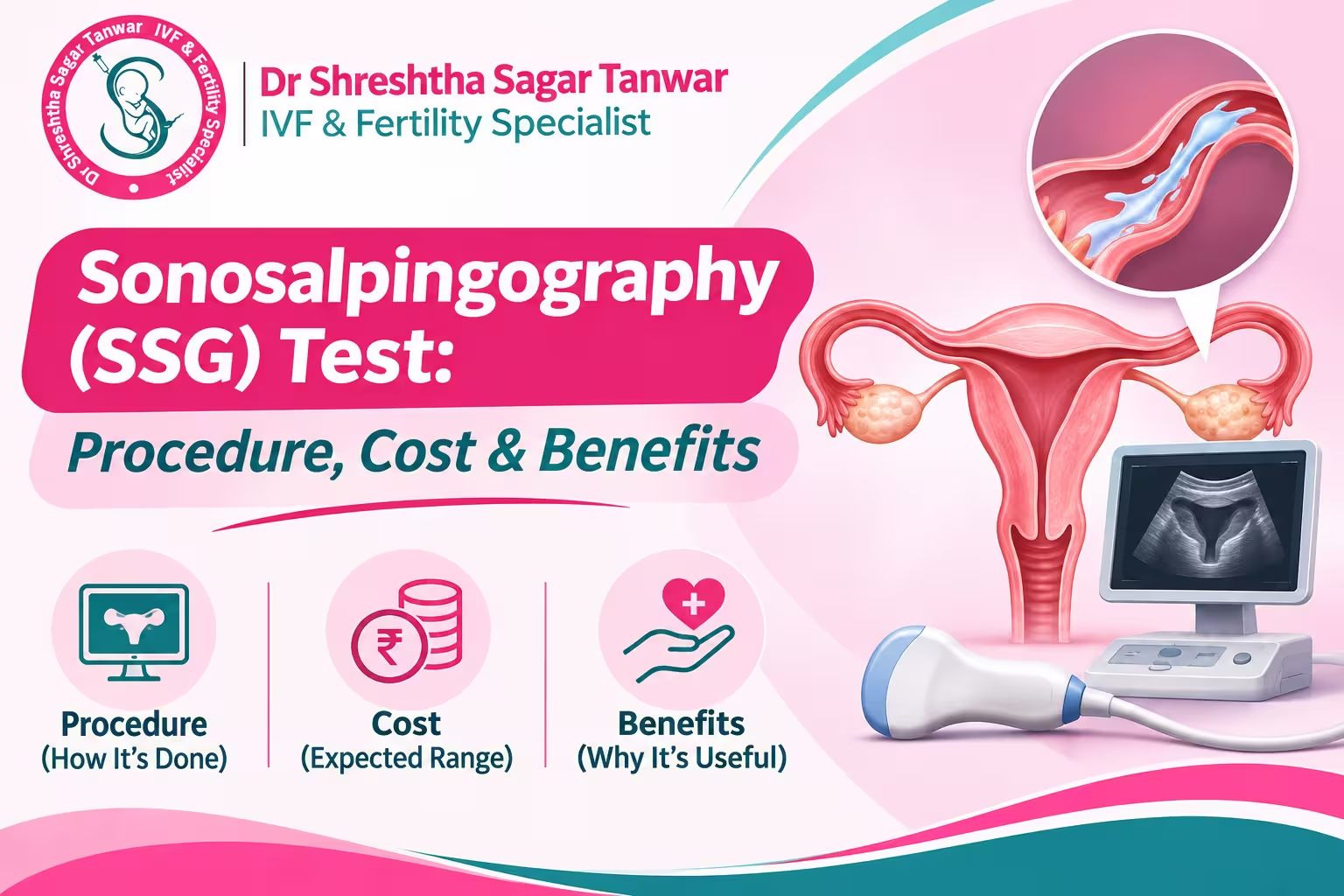
A sonosalpingography (SSG) test is a safe, radiation-free ultrasound procedure used to check if the fallopian tubes are open (patent) and to evaluate the structure of the uterine cavity.
What Is a Sonosalpingography (SSG) Test?
A Sonosalpingography (SSG) test is a specialised, radiation-free ultrasound examination used to evaluate female fertility. It helps assess the shape and structure of the uterine cavity and determine whether the fallopian tubes are open (tubal patency).
The fallopian tubes play an important role in natural pregnancy. After ovulation, the egg travels into the fallopian tube, where fertilisation may take place if it meets sperm. If one or both fallopian tubes are blocked, it may make it more difficult to conceive naturally.
During an SSG test, a thin tube is gently placed through the cervix, and a sterile fluid or suitable contrast medium is introduced into the uterus. An ultrasound is then used to observe the uterine cavity and assess whether the fluid passes through the fallopian tubes.
While an SSG test can provide useful information about the uterus and tubal patency, it cannot identify all causes of infertility. Factors such as ovulation, egg quality and sperm health may require separate tests and evaluation.
Why Is an SSG Test Recommended?
An SSG test may be recommended by your doctor if you find it difficult to conceive or if there is a need for assessment of the fallopian tubes.
Some of the instances where the test may be beneficial are:
- Difficulties in conceiving: This helps the physician establish whether there is any blockage in the fallopian tubes.
- Fallopian Tube Blockage: There are some cases where certain factors like infections, endometriosis, or surgery might make the physician suspect a fallopian tube blockage.
- Uterine assessment: The scan will be able to determine any changes in the womb where pregnancy occurs.
- Planning fertility treatment: This test may allow your doctor to recommend further tests or treatment.
A blocked fallopian tube is not always painful and may not come with any symptoms. Some of the women who may suffer from this condition do not have any problem and have regular menstrual cycles.
When Should You Get an SSG Test?
The timing of SSG testing is important because the doctor needs to look at the uterus at the right point in the menstrual cycle.
Testing usually occurs after the bleeding in the menstrual cycle has stopped and before ovulation. This typically occurs in the first half of the menstrual cycle.
Exact timing of the test depends on the length of the menstrual cycle and the clinic’s procedures.
Before SSG testing, the doctor should be told about the possibility of pregnancy, unusual vaginal discharge, fever, or anything else that may suggest an infection. The doctor will decide if the test should be postponed.
Women who have irregular menstrual cycles should also discuss when the SSG test should be done with their doctor. Women who are undergoing fertility treatments should discuss SSG testing with their doctor.
What Happens During the SSG Test Procedure?
The SSG test procedure involves a few simple steps. The doctor checks the uterus and fallopian tubes using ultrasound to see whether fluid passes through the tubes.
1. Preparation Before the SSG Test
- The doctor may advise taking a pain reliever before the test to reduce possible cramps. Take medicine only as advised.
- An empty bladder may be required before the SSG scan. Follow the clinic’s instructions.
2. Pelvic Examination
- The woman lies on an examination bed, similar to a routine gynaecological check-up.
- The doctor gently places a speculum into the vagina to see the cervix. The area may be cleaned before the next step.
3. Placing a Thin Tube
- A thin, flexible tube is gently passed through the cervix into the uterus.
- This tube allows the doctor to introduce fluid during the SSG test procedure.
4. Fluid Introduction and Ultrasound Scan
- The ultrasound wand is inserted into the vagina to visualize the uterus and nearby area.
- Sterile fluid or the contrast material is injected slowly into the uterus via the thin catheter.
- The doctor observes the ultrasound screen for the flow of fluid through the uterus and fallopian tubes.
5. Completing the SSG Test
- After the test is completed, the doctor will remove the small tube and the speculum.
- The procedure does not involve a prolonged stay at the clinic, and patients are able to leave almost immediately after it is done.
Women may have slight cramps or spotting following the SSG procedure. However, if there is pain, fever or heavy bleeding, one needs to see a doctor.
Is the SSG Test Painful?
The SSG test is generally easy to do; however, different women have different experiences. For some women, there is no problem, but others feel cramping due to fluid filling up the womb.
If there are some sensitivity issues around the cervix, then cramping will be more pronounced due to the fluid that gets into the womb. This test might be hard for those women who get anxious before the procedure.
Those women who have a history of pain during gynecological tests should inform their doctors about it.
SSG Test Cost in India
The SSG test cost in India varies between clinics and cities. As a general estimate, the price may range from around ₹3,000 to ₹7,000, but the actual fee can be lower or higher depending on the facility and the test method. This range should be confirmed with the clinic before booking.
The total cost may depend on:
- The clinic or hospital where the test is performed.
- The type of ultrasound and fluid or contrast method used.
- Whether a consultation fee is included.
- Whether any additional tests are required.
Before booking, ask the clinic for the complete SSG test price, including consultation and any other charges. The doctor can also explain whether SSG is suitable or if another test would provide more useful information.
SSG vs HSG: What Is the Difference?
Both SSG and HSG are used to assess the uterus and fallopian tubes, but they use different imaging methods.
Which Is Better: SSG or HSG?
Neither test can be said to be better for every woman; everything comes down to medical background, needed information, and available facilities.
A consultation with a gynaecologist in regard to SSG versus HSG could shed some light on which test should be used. In case of inconclusive or negative results, an additional evaluation could be required.
What Are the Benefits of an SSG Test?
A fertility scan by SSG can yield valuable information when undertaking a fertility test. Some of its advantages include:
- No X-ray radiation: An SSG fertility test does not utilize any radiation, as opposed to an X-ray test.
- Assessment of the fallopian tubes: It will assist in determining whether there is movement of fluid through the Fallopian tubes.
- Examination of the uterus: There is a possibility of detecting certain abnormalities in the interior of the uterus.
- Usually done at a clinic: Most women do not need to stay in the hospital for more than the test.
- Helps guide further care: Information from the test can help determine what course of action to take next.
Limitations exist as well, with the test being unable to confirm all possible reasons for infertility.
Is the SSG Test Safe? Possible Risks and Side Effects
The SSG test is generally considered safe when performed by a trained healthcare professional in suitable circumstances. However, as with any procedure involving the uterus, some side effects are possible.
These may include:
- Mild abdominal cramps.
- Light vaginal spotting.
- Temporary discomfort during the test.
- Infection, which is uncommon but possible.
The doctor may recommend delaying the test if there is a suspected pelvic infection or a possibility of pregnancy. Share any relevant symptoms or medical history before the procedure.
Seek medical advice if severe pain, fever, heavy bleeding or unusual discharge develops after the test.
What Do SSG Test Results Mean?
The SSG test allows the doctor to evaluate the uterine cavity and fallopian tubes for patency.
If fluid passes through the tubes, this is a reassuring result. However, this does not assure that natural pregnancy will occur. Other factors of the reproductive system, such as sperm and ovulation, also play a role.
If fluid does not pass through a tube, this result could suggest a blockage. Sometimes the result is unclear, and a doctor may recommend a different test.
The scan may also reveal abnormalities in the uterus that warrant further evaluation. The doctor will review these findings alongside the woman’s medical history and other fertility tests.
What Happens After an SSG Test?
The next step depends on the SSG test results and the woman’s goals for fertility.
- If the tubes appear open: The doctor may evaluate the factors that explain why pregnancy has not occurred, including an assessment of ovulation and the health of the partner’s semen.
- If blockage is suspected: The doctor may recommend additional tests to confirm and further evaluate the finding.
- If changes are seen inside the uterus: The doctor may also recommend further imaging or endometrial biopsy.
- If fertility treatment is being considered: The results may assist in formulating a management plan.
Usually, a single test doesn’t provide the complete answer. The doctor may evaluate all the tests of the fertility assessment prior to recommending treatment.
Conclusion
The Sonosalpingography (SSG) test is a helpful procedure for conducting a fertility test. It is especially important when the doctor wants to examine the fallopian tubes and uterus. Information on the process, discomfort level, and costs will help you be better prepared for this test. Dr. Shreshtha Sagar Tanwar, an IVF specialist in Greater Noida with 16+ years of experience, is willing to help you get through your fertility test.
Frequently Asked Questions
1. What is the cost of an SSG test?
The cost of an SSG test in India might range from ₹5,000 to ₹10,000 approximately. The exact amount will depend on the clinic you visit, the procedure performed, and whether the consultation fees are involved. You should confirm the cost prior to scheduling an appointment.
2. Does an SSG test hurt?
Some women feel mild cramps or pressure during an SSG test, while others experience very little pain. It will vary depending on the individual. It should be disclosed to the physician if you have had any previous difficulties with exams or pelvic organs.
3. HSG or SSG – which is better?
HSG and SSG can help evaluate the uterus and fallopian tubes. SSG employs ultrasound, while HSG utilizes X-ray technology. The physician will advise you as to which test is better for your case.
4. Is the SSG test safe?
The SSG test is normally safe when done by a trained expert in appropriate settings. Some mild cramping and spotting might happen. Infection is rare; however, any fever or extreme pain following the test must be treated medically.
5. Can an SSG test determine blocked fallopian tubes?
This test could show whether there is any flow of fluid within the fallopian tubes. If there is no passage of fluid within the tube, there could be a blockage.