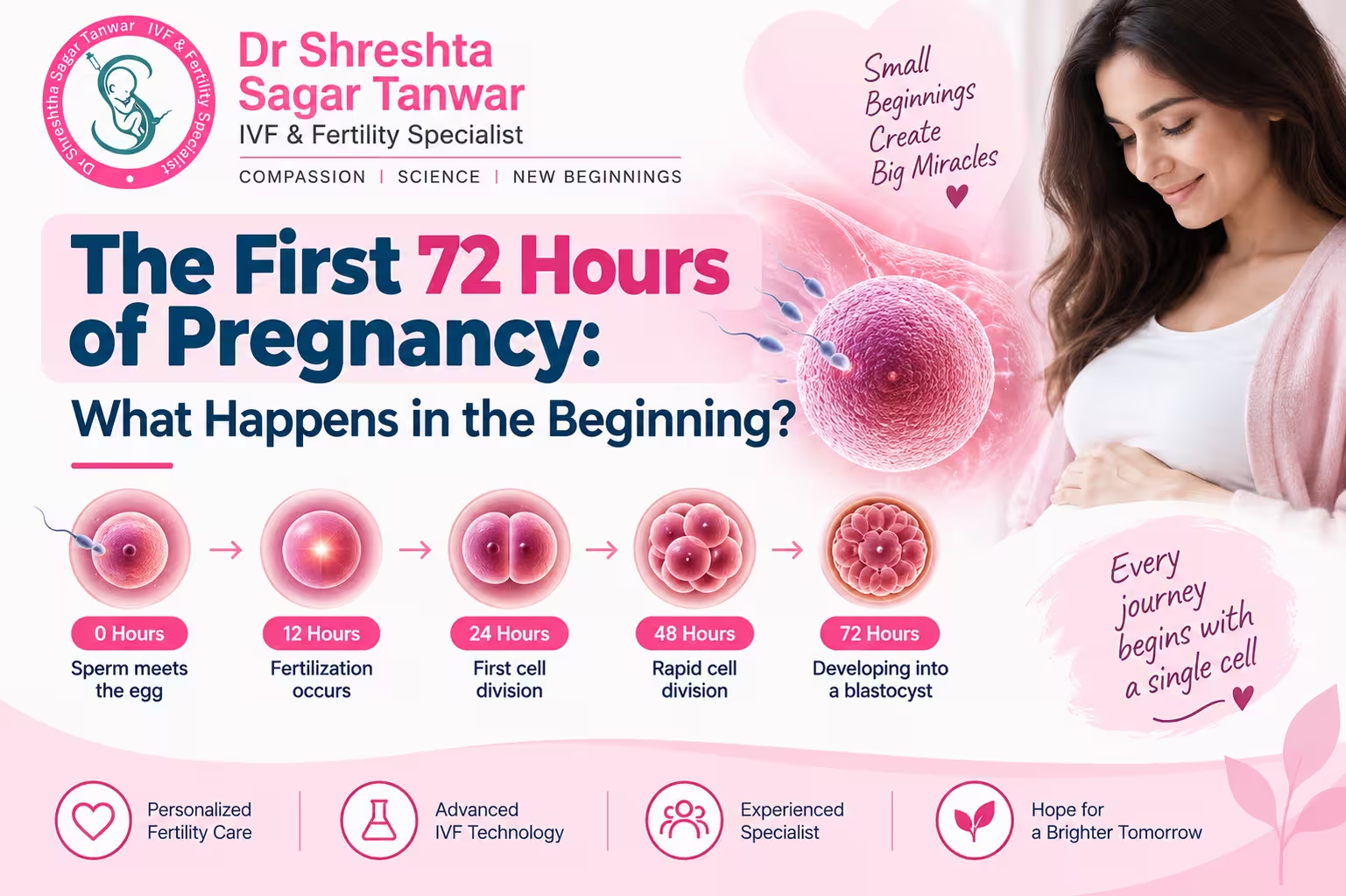
The first 72 hours after conception is a quiet, microscopic phase where fertilization and early cell division take place, meaning true pregnancy symptoms are generally not noticeable yet. During this time, the fertilized egg continues its early development and begins its journey toward the uterus.
What Happens During the First 72 Hours After Fertilization?
Fertilization occurs inside the fallopian tube as the result of the fusion of a sperm and an egg into a zygote. Then, the following occurs:
- The fertilized egg begins dividing: A single cell starts dividing into other cells on its way to the uterus.
- Cell cluster continues developing: For a few more days, the dividing cells form an embryo. It is still a small cell cluster at this moment.
- Embryo is moving towards the uterus: The developing cell cluster continues moving inside the fallopian tube. Up to 72 hours of pregnancy, it is not attached to the uterus.
- The body prepares itself for the next step: The lining of the uterus undergoes changes as usual due to the action of hormones, which creates conditions for implantation.
According to ACOG, after fertilization, dividing cells continue their way to the lining of the uterus, where implantation takes place.
Can You Feel Pregnancy Symptoms in the First 72 Hours?
Usually, no.
This is usually the most confusing part of very early pregnancy. Around this time, some people notice cramps, fatigue, bloating, and sore breasts, and start to wonder if these symptoms could be early signs of pregnancy.
These symptoms cannot confirm pregnancy.
Usually, a fertilized egg is still outside of the uterus, and it takes at least 72 hours for the egg to travel and implant in the uterus. hCG (human chorionic gonadotropin) begins to develop only after implantation. This is why the reference article by 3Billion says that there are no symptoms of pregnancy for the first three days.
It is likely that you will feel something, but these feelings can be caused by the normal changes that happen around ovulation, Progesterone, digestion, PMS, and other everyday reasons.
What About Cramps or Mild Lower Abdominal Pain?
Mild cramps may occur during ovulation or before the start of a period; therefore, experiencing slight discomfort does not suggest that pregnancy is taking place.
Some articles describe early cramps as a pregnancy indication, but timing is crucial. Implantation can occur several days following fertilization, and not within those first few hours. ACOG notes that light spotting related to the implantation process can be seen one to two weeks after fertilization.
Therefore, if you experience minor cramps after three days of the possibility of conception, it's not yet time to use the symptom as evidence of pregnancy.
The pain that is severe, constant, or discomfort that is triggered by excessive bleeding should not be ignored. It must be addressed with a physician.
Is Spotting Possible in the First 72 Hours?
Spotting is often discussed in relation to early pregnancy; however, implantation spotting usually does not occur during the first 72 hours following fertilization.
Implantation occurs later, when the developing embryo attaches to the uterine lining. If implantation bleeding occurs, it is generally noticed several days after fertilization rather than during the first few days.
This means that spotting within the first few days is not a reliable indicator of pregnancy. It can have various causes, including ovulation, hormonal changes, or the approaching start of menstruation.
When Does Implantation Happen?
After fertilization, the developing embryo requires some time to move to the location of the uterus.
Implantation does not occur right away following fertilization but occurs several days later. As indicated by 3Billion, the implantation of the fertilized egg occurs about 6 to 12 days from ovulation, averaging 9 days.
This makes the timing different from one pregnancy to another; that is why there is no particular day when implantation takes place.
Following implantation, the cells contributing to the formation of the placenta release hCG.
When Can a Pregnancy Test Detect Pregnancy?
A pregnancy test that is taken within the first 72-hour period following fertilization is too early in many cases.
Tests for home pregnancy detect the presence of hCG in urine. The hormone takes time to reach an amount that tests can detect. The NHS states that most pregnancy tests are most reliable on the first day after a missed period; however, certain tests that are sensitive may be tested earlier.
If you are testing too early and have an unfavorable result, it doesn't necessarily mean you're not pregnant. You may not have enough hCG
For a more secure outcome:
- Make sure that the scheduled time is missed If you can.
- Follow the directions for the pregnancy test with care.
- If the test is negative, but your menstrual cycle doesn't appear, retake the test within a couple of days.
What Symptoms Usually Appear Later?
Most pregnancy symptoms experienced by women usually appear after hormonal changes have had some time to develop. This is why noticeable symptoms are generally not expected during the first few days after conception.
Some symptoms that may occur during early pregnancy include:
- Missing period – A missed period may be one of the first noticeable signs of pregnancy.
- Breast tenderness – Hormonal changes may cause the breasts to feel sore, heavy, or more sensitive.
- Fatigue – Changes in progesterone and other pregnancy hormones may contribute to tiredness.
- Nausea – Nausea usually develops later rather than immediately after conception.
- Frequent urination – Some women may notice this early, although it is more common as pregnancy progresses.
- Appetite changes or smell sensitivity – Some women may develop food aversions or become more sensitive to certain smells.
It is important to remember that these symptoms do not always mean pregnancy. Similar changes can also occur due to PMS, stress, illness, or normal hormonal fluctuations. Therefore, a pregnancy test at the appropriate time is more reliable than symptoms alone for confirming pregnancy.
What Should You Do During These Early Days?
If you're trying to get pregnant, it is not necessary to check your body periodically for indications of pregnancy. In the first 3 days, it generally doesn't provide reliable indicators.
Instead, concentrate on the aspects that are beneficial during the early pregnancy and the preconception phase.
- Consider taking a prenatal vitamin if your doctor has suggested one, particularly folic acid.
- Do not drink or smoke when trying to conceive, and after a pregnancy is confirmed.
- Keep taking the prescribed medications as directed by your physician. Do not stop your regular medication at a sudden time without medical guidance.
- Drink plenty of water and eat normally. There isn't a specific food or drink that can cause implantation to occur in a matter of minutes.
- It is important to give the pregnancy test sufficient time. If you test too early, it can cause anxiety since a negative result could be due to testing too early.
When Should You Speak to a Doctor?
If you are experiencing intense pelvic or abdominal discomfort, bleeding that is heavy and, fainting, intense dizziness, or any other odd signs, consult a physician rather than thinking these are normal symptoms of pregnancy.
For the majority of people, however, there is something specific to experience or watch for in the first 72 hours. The pregnancy is in the very beginning of cellular development, and implantation has not typically occurred yet.
If you've tried to conceive for a while or have fertility questions, consulting with a fertility professional may be more effective than attempting to identify very early signs.
Conclusion
The first 72-hours following fertilization is a peaceful but crucial stage of development. The fertilized egg begins to split and travel through the fallopian tubes towards the uterus. However, the process of implantation typically occurs a few days later. Due to this, the majority of women do not show any pregnancy symptoms for the initial three days, and an ultrasound test for pregnancy is not appropriate at this point.
If you're trying to get pregnant and need assistance regarding early pregnancy, fertility tests, or treatment with Dr. Shreshtha Sagar Tanwar, an experienced infertility specialist in Greater Noida will assist you in understanding your specific situation. She has over 16 years of experience working in Obstetrics and Gynaecology as well as fertility treatment and management, which includes the treatment of difficult female and male infertility cases.
FAQs
1. Can you feel pregnancy symptoms within 72 hours?
Usually, no. The fertilized egg has generally not implanted in the uterus during the first 72 hours, so there are usually no reliable pregnancy symptoms at this stage.
2. Can implantation happen within 3 days of fertilization?
Implantation generally happens several days after fertilization. It is not expected to occur within the first 72 hours in a typical pregnancy.
3. Can a pregnancy test be positive 3 days after conception?
It is generally too early. Pregnancy tests detect hCG, which rises after implantation. Testing this early can give a negative result even if pregnancy later develops.
4. Is cramping 3 days after conception a sign of pregnancy?
Cramping at this stage cannot confirm pregnancy. It may be related to ovulation, normal hormonal changes, PMS or other causes. Implantation-related symptoms, when they occur, happen later.
5. When is the best time to take a pregnancy test?
For most people, a home pregnancy test is most reliable from the first day of a missed period. If you do not know when your period is due, the NHS recommends testing at least 21 days after the last unprotected sex.